


How Mobile Dental Clinics Are Revolutionizing School Care


Remember when the school nurse's office was just that small room with a cot and some band-aids? Times have changed. Today, 20% of American children have untreated tooth decay, with low-income students three times more likely to miss school due to dental pain.
That's where mobile dental clinics are revolutionizing school-based healthcare. These specialized vehicles bring comprehensive dental services directly to school parking lots, eliminating barriers that keep kids from getting care.
Think about it: no more parents missing work. No more transportation hurdles. Just professional dental teams rolling up to schools with everything from cleanings to fillings, serving students who might otherwise fall through the cracks.
But the real magic isn't just in the convenience. It's what happens after these programs take root in a community.
The Growing Need for Accessible Dental Care in Schools
A. Alarming Statistics on Untreated Dental Issues Among Students
The numbers tell a shocking story. Nearly 20% of children aged 5-11 have at least one untreated decayed tooth. For adolescents 12-19, that number jumps to 13%. These aren't just statistics – they represent millions of students sitting in classrooms while dealing with tooth pain.
School districts in underserved areas report that dental problems are among the top reasons for student absences. In some communities, over 50% of third-graders show signs of tooth decay, with more than half of these cases going untreated.
B. How Poor Dental Health Impacts Academic Performance
When teeth hurt, learning takes a back seat. Students with dental pain are three times more likely to miss school compared to their peers. Those absences add up – missing just 10% of school days significantly decreases academic achievement.
Beyond attendance, the impact runs deeper:
Difficulty concentrating during lessons
Reluctance to participate in class discussions
Lower test scores and grades
Decreased self-confidence affecting social development
Research shows children with poor oral health are nearly three times more likely to struggle academically due to school absences and reduced attention spans.
C. Barriers to Traditional Dental Care for Students
Access to dental care remains frustratingly out of reach for many families.
The barriers are substantial:
Geographic limitations: Rural communities often lack dental providers within reasonable distance
Work conflicts: Parents losing wages for daytime appointments
Transportation issues: No reliable way to reach dental offices
Insurance gaps: Nearly 10.3% of children lack dental coverage
Cost concerns: Even with insurance, out-of-pocket expenses deter regular visits
D. Equity Issues in Pediatric Dental Access
The dental care gap isn't distributed equally. Children in low-income households are twice as likely to have untreated decay compared to their more affluent peers. Black and Hispanic students show consistently higher rates of untreated dental issues than white students.
This disparity extends to special needs students who face additional challenges in finding accommodating providers. The result? A two-tier system where dental care becomes a privilege rather than a fundamental health service.
Urban schools in high-poverty areas report that 35-40% of their students have visible dental problems, while schools in affluent areas report rates under 15%. The gap illustrates how dental health has become another marker of socioeconomic inequality in education.
What Are Mobile Dental Clinics?

Core Components and Equipment
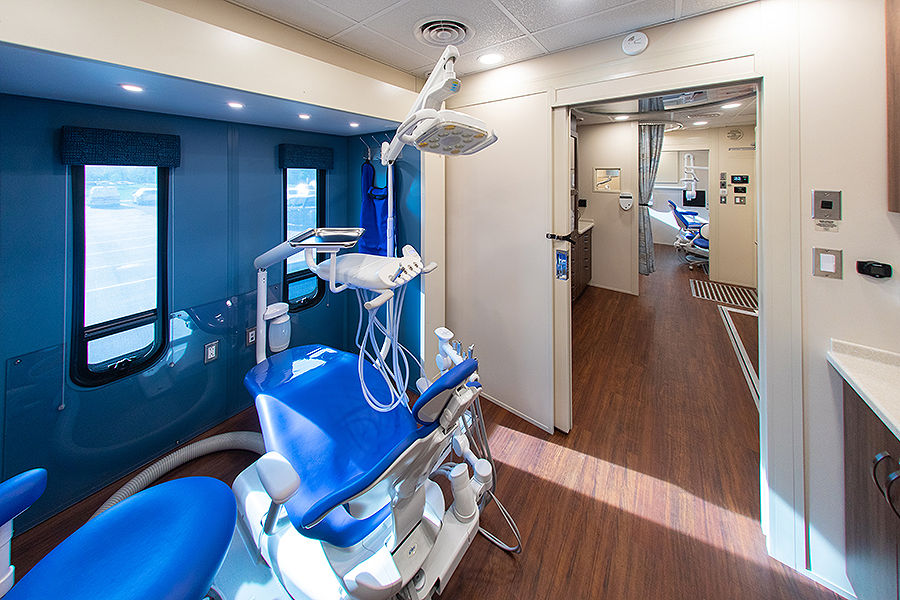
Mobile dental clinics operate from specially designed vehicles equipped with comprehensive dental tools and technology.
These units typically feature:
Dental chairs that fold out or are fixed in designated treatment areas
X-ray equipment (often portable digital systems)
Sterilization stations that meet all CDC guidelines
Water and waste management systems
Generator or power connection capabilities
Storage for supplies and medications
Digital record-keeping systems
The beauty of these mobile units? They pack everything found in traditional dental offices into a vehicle that can drive right up to a school. Modern mobile clinics often incorporate telehealth technology, allowing for consultation with specialists when needed.
Types of Services Offered by Mobile Dental Clinics
Mobile dental clinics in schools typically provide:
Preventive care (cleanings, fluoride treatments, sealants)
Basic diagnostic services including digital X-rays
Restorative treatments such as fillings
Emergency dental care for pain or infection
Oral health education and hygiene instruction
Screenings for dental diseases and conditions
Referrals for complex procedures
The services focus primarily on prevention and early intervention—catching problems before they require extensive treatment. This approach proves particularly effective for children who might otherwise never see a dentist until pain drives them to emergency care.
Staffing and Professional Requirements
Operating a mobile dental clinic requires:
Licensed dentists who oversee all clinical operations
Dental hygienists who perform cleanings and preventive care
Dental assistants who support procedures and patient management
Administrative staff handling scheduling and insurance
Drivers trained in operating specialized vehicles (often with CDL certification)
Staff must adapt to unique challenges like limited space and varying school environments. Many states have specific regulations for mobile dentistry, requiring additional permits beyond standard dental licensing. Staff also need specialized training in portable equipment operation and maintenance.
The most successful mobile dental programs employ professionals who not only possess technical skills but also excel at creating positive experiences for children who may feel anxious about dental treatment.
Key Benefits of Mobile Dental Programs in School Settings
A. Eliminating Transportation Barriers
Mobile dental clinics park right at school campuses, removing one of the biggest hurdles to dental care - transportation. Many families struggle with getting kids to dental appointments due to work schedules, lack of reliable transportation, or distance to dental offices. The mobile solution brings care directly to where children already are.
For rural communities, this benefit multiplies. When the nearest dentist might be 30+ miles away, a mobile clinic visiting the local school becomes a game-changer for families who would otherwise need to take a half-day off work just for travel time.
B. Reducing Classroom Absence for Dental Appointments
Traditional dental visits often mean missing half a day of school. With on-site dental care, students typically miss only 30-45 minutes of class time. The math is simple:
Traditional Dental Visit | Mobile School Dental Visit |
3-4 hours away from school | 30-45 minutes away from class |
Travel time + waiting room time | Walk down the hall |
Potential for parent missing work | No parent time off needed |
The educational impact adds up when considering preventive care requires multiple visits annually.
C. Early Detection of Dental Problems
School-based dental programs excel at catching issues early. Regular screenings can identify cavities, orthodontic needs, or gum problems before they become painful emergencies.
The statistics tell the story - schools with mobile dental programs report significantly fewer emergency dental situations and absences due to tooth pain. When dental professionals see children consistently, small issues never get the chance to become major problems.
D. Creating Positive Dental Experiences
The familiar school environment helps reduce dental anxiety that many children experience. First dental experiences in a place where kids already feel comfortable can set the stage for lifetime positive attitudes toward oral health.
Mobile clinics are specifically designed with kid-friendly environments – smaller equipment, colorful decor, and staff specially trained in pediatric care. The result? Children who view dental care as a normal, non-threatening part of their routine.
E. Cost Savings for Families and School Systems
The economic benefits of mobile dental programs extend to both families and school districts. For families, these programs often accept Medicaid and offer sliding scale fees, making care accessible regardless of financial situation.
For school systems, the reduction in absenteeism translates to increased attendance funding. Additionally, healthy students with pain-free mouths learn better, potentially improving academic outcomes and test scores.
The preventive focus of these programs also means fewer expensive emergency dental situations down the road - a win for healthcare systems, insurers, and families alike.
Success Stories and Case Studies
Rural School Districts Transformation
The impact of mobile dental clinics in rural communities has been nothing short of remarkable. In Appalachian Kentucky, the "Smiles on Wheels" program transformed dental care access for over 15 schools across three counties. Before the program, nearly 68% of students had untreated cavities. Within two years, that number dropped to just 29%.
A Montana initiative called "Big Sky Smiles" reaches 22 remote schools where the nearest dentist is often 50+ miles away. Their mobile units have provided care to over 3,000 students annually since 2018, with a 76% reduction in emergency dental visits among participating schools.
Urban School Initiatives Making an Impact
Urban areas face different challenges but show equally impressive results. Chicago's "Healthy Teeth, Healthy Kids" program serves 50+ schools in underserved neighborhoods. The program has screened more than 25,000 students and provided comprehensive care to 8,000+ children who might otherwise never see a dentist.
In Los Angeles, the "Smile Bright LA" initiative partners with 30 schools in areas with limited dental care access. The program not only provides treatment but also trains school nurses in basic dental assessments, creating sustainable oral health monitoring systems.
Measurable Improvements in Student Dental Health
The data tells a compelling story about mobile dental programs' effectiveness:
Measurement | Before Programs | After Programs |
Untreated decay | 51% average | 24% average |
School absences due to dental pain | 3.8 days/year | 1.2 days/year |
Emergency dental visits | 28% of students | 9% of students |
Preventive sealants | 22% coverage | 78% coverage |
These improvements translate to better academic performance. Schools with established mobile dental programs report 15-30% improvements in attendance rates and noticeable advances in classroom concentration and participation.
Implementing Mobile Dental Programs
A. Funding Sources and Sustainability Models
Mobile dental programs need solid financial backing to keep running year after year.
Smart programs tap into multiple funding streams rather than relying on just one source:
Government grants: Federal programs like HRSA and state-level initiatives often provide startup funding
Private foundations: Organizations like DentaQuest Foundation and Delta Dental Community Care Foundation offer grants specifically for oral health initiatives
Insurance reimbursement: Billing Medicaid, CHIP, and private insurers creates ongoing revenue
Sliding-scale fees: Families pay based on income level, ensuring nobody is turned away
The most successful programs create a hybrid funding model. For example, a program might use foundation grants to purchase equipment, bill insurance for clinical services, and partner with local businesses for sponsorships to cover operational gaps.
B. Partnerships Between Schools and Dental Providers
Strong partnerships form the backbone of effective school-based dental programs. Schools provide the student population and physical space, while dental providers bring clinical expertise and equipment.
The most productive partnerships include:
Regular coordination meetings between school nurses and dental staff
Clear communication channels for scheduling and follow-up care
Shared data systems that track student participation and outcomes
Joint training sessions for staff from both organizations
Many schools find success by partnering with Federally Qualified Health Centers (FQHCs), which already have systems in place for serving underinsured populations. Others work with dental schools, creating valuable training opportunities for dental students while providing care to children.
C. Navigating Regulations and Compliance
Mobile dental programs operate at the intersection of healthcare and education, requiring careful attention to various regulations:
Licensing requirements: Dental professionals must be properly licensed in the state where services are provided
Facility standards: Even mobile units must meet specific requirements for infection control, waste disposal, and equipment maintenance
Privacy laws: Programs must comply with both HIPAA (for health information) and FERPA (for educational records)
Insurance credentialing: Providers need appropriate credentials to bill various insurance plans
Successful programs designate a compliance officer who stays current with changing regulations and ensures all team members follow proper protocols. Regular audits and quality improvement initiatives help maintain high standards and prevent compliance issues.
D. Parental Consent and Engagement Strategies
Gaining parental buy-in requires more than just collecting signed forms. Effective engagement strategies build trust and increase participation:
Multilingual consent forms written in clear, simple language
Educational materials explaining services and benefits
Parent information sessions held during convenient evening hours
Text message reminders about upcoming dental visits
Follow-up reports sharing findings and recommendations
Schools with high participation rates often incorporate dental consent into the regular school registration process. They also leverage existing communication channels like parent-teacher conferences and school newsletters to promote the dental program.
Beyond consent, ongoing engagement keeps parents involved in their child's oral health. This might include sending home dental hygiene supplies with instructions, sharing photos of the mobile clinic in action, or inviting parents to volunteer during dental visit days.
Technological Innovations Driving Mobile Dental Care
Digital Record-Keeping for Continuity of Care
Gone are the days of paper charts and filing cabinets in mobile dental clinics. Digital record-keeping systems have transformed how patient information is managed across school visits. These electronic health records allow dental professionals to access complete patient histories instantly, even when treating students at different schools throughout the district.
The real game-changer? Cloud-based systems that sync data in real-time. When a hygienist treats a student at one school, that information becomes immediately available when the same student receives care at another location. This seamless transfer of information prevents treatment gaps and eliminates redundant procedures.
Mobile-optimized platforms now feature:
Touch-screen compatibility for quick chairside documentation
Automated appointment scheduling for follow-up visits
Parent/guardian portals for viewing treatment summaries
Integration with school health systems for comprehensive care
Portable Diagnostic Equipment Advancements
The dental equipment rolling into schools today barely resembles the bulky units of the past. Handheld X-ray devices now weigh less than five pounds while delivering diagnostic images comparable to traditional wall-mounted units. These images transfer wirelessly to tablets for immediate analysis.
Intraoral cameras have shrunk to pen-sized tools that capture high-definition images of problem areas, making it easier to show students exactly what's happening in their mouths. This visual education component improves cooperation and understanding among younger patients.
Portable dental units now combine:
Air/water syringes
High/low speed handpieces
Ultrasonic scalers
Suction systems
LED lighting
All packed into cases that set up in minutes and deliver the same quality care found in permanent clinics.
Teledentistry Integration for Expert Consultations
When complex cases arise in school settings, teledentistry connects on-site providers with specialists miles away. Live video consultations allow pediatric dental specialists to assess difficult cases without the student ever leaving school grounds.
This technology drastically cuts referral waiting times. What once took weeks now happens in minutes. A dental hygienist discovering a suspicious lesion can immediately connect with an oral pathologist for guidance.
Advanced teledentistry platforms feature:
HIPAA-compliant video conferencing
Secure image sharing capabilities
Digital impression technology for remote treatment planning
AI-assisted diagnostic tools that flag potential issues
The combination of on-site care with virtual specialist access means more comprehensive treatment plans and fewer missed school days for dental appointments.
Mobile dental clinics have transformed healthcare access for students across the country, bringing essential oral health services directly to where children spend most of their day. These innovative solutions address critical barriers like transportation challenges and parent work conflicts while creating comfortable, familiar environments for children to receive care. The technological advancements in portable equipment have made these programs increasingly effective and comprehensive.
School administrators, policymakers, and healthcare providers should consider implementing mobile dental programs as a practical strategy to improve student health outcomes and reduce absenteeism. By prioritizing preventive care through these accessible services, we can help ensure all children have the opportunity to learn without the distraction of preventable dental pain, ultimately supporting both their educational success and lifelong health.


